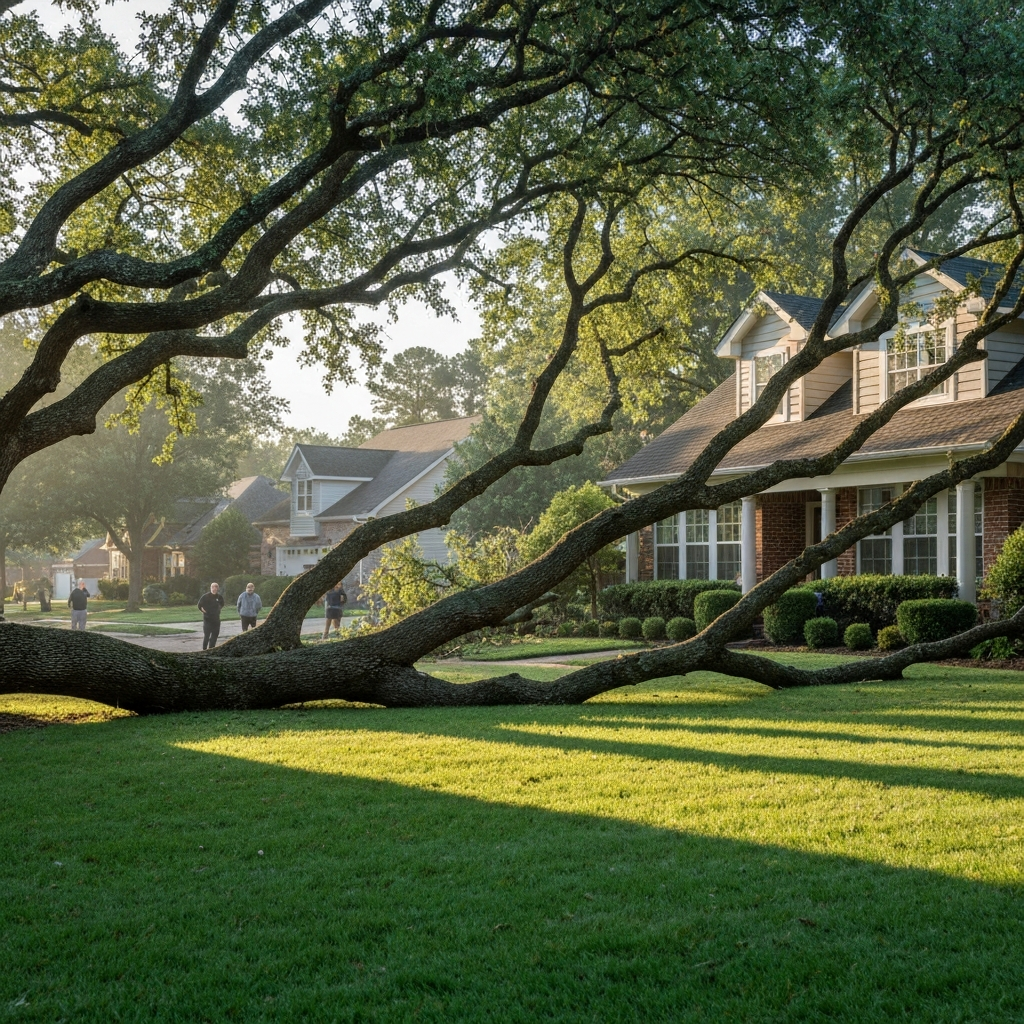
A tree that has fallen in your yard can surprise you. It often happens fast, usually from a big storm or strong wind. A large tree can fall and leave their yard a mess. You may also feel lost about what to do next. Who has to clean it up? Will your insurance help pay for the damage? It is important to know the right things to do to keep you safe and help with money. The guide below will help you learn what to do with a fallen tree. This includes safety steps and some tips for tree care and getting the tree taken away.
Understanding Why Trees Fall in Residential Areas
When you see a fallen tree on your land, you need to think about why it came down. The thing that made it fall is important. It can help you know who has to clean it up and pay for the cost. A tree can fall because of the weather or something people did. Most of the time, it falls for one of these two reasons: natural causes or a mistake made by someone.
Events like high winds or a bad snowstorm are natural. These things cannot be stopped. But, when someone does not do tree care, like not checking for disease in the tree trunk or not cutting weak branches, this is called negligence. Knowing what caused the problem will help you decide what to do next, mainly when with insurance.
Most Common Causes of Fallen Trees
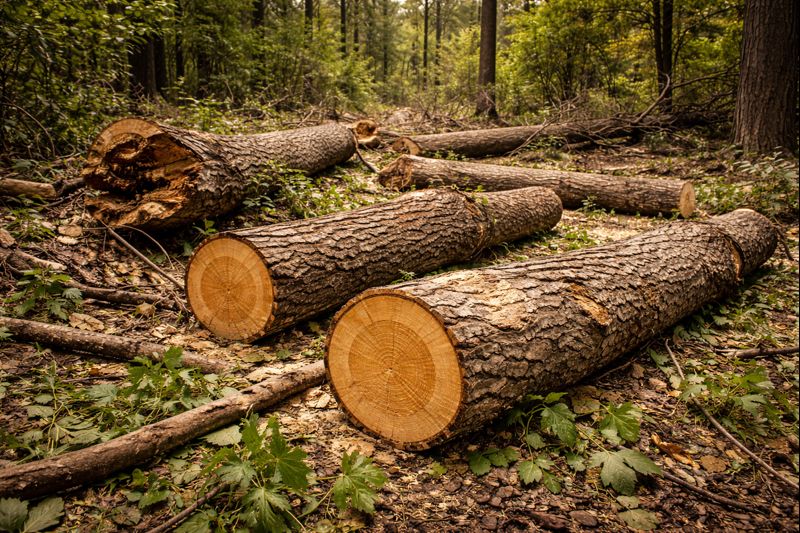
Trees might fall for several reasons, but most times there are a few main reasons. If you know about these causes, you can decide what to do next. You can also stop some problems before they happen. The top reasons trees come down are about the weather and how healthy the tree is.
Some things just can’t be stopped. People often call these “acts of God.” They happen because the weather or nature is very strong. A storm can rip out a healthy tree, even if it was fine before.
High winds that come from storms or hurricanes can break trees.
A lot of snow or ice can build up and be heavy. This can make branches fall down.
Lightning can hit trees and hurt them.
Sometimes, a tree falls because of negligence. This is when a property owner does not give the right tree care. A tree trunk can get weak, or the branches can become sick. In this case, the tree is not strong and may fall down. Warning signs include a weak tree trunk or branches that are not healthy. Some people may ignore pest problems, not trim branches that are too long, or not treat a tree that is sick before it gets dangerous.
Risks and Hazards of a Fallen Tree in Your Yard

A fallen tree is not just a problem. It can put you, your home, and your things at risk. When a tree falls, it makes the area unsafe right away, so you have to be careful. The main thing to watch for is the damage the fallen tree may have done to your house, car, or other parts of your property.
Some of the biggest risks are not easy to see. A fallen tree may get mixed up with power lines. This can be very dangerous. If you see a tree that is touching any wires, stay far away from it. Always think that those power lines are live.
Live power lines are very dangerous. They can shock you and that can be deadly.
The tree could have hurt the way your home holds up. This makes it weak or unsafe.
Sharp branches and loose logs can cut you or hurt you in other ways.
Never go close to check the damage unless you are sure the area is safe. If you do not use good tree care, your trees can get weak. Weak trees often fall and make dangerous problems just like this. If there are power lines, you must call your local utility company or 911 first.
Immediate Steps to Take After Discovering a Fallen Tree
When you see a fallen tree, you need to act fast to stay safe and help with cleanup. First, look at the area from far away. Do not walk up close right away. There can be hidden things like loosed wires or a weak part that could hurt you.
After you know it’s safe to go outside, take some pictures of the area. This will help your insurance company later. Then, call a professional to help with the tree removal. Doing these things first will make the process go well and help keep everyone safe. Here is how you can put safety first and make sure you show all the damage for your claim.
Prioritizing Safety and Creating a Safe Perimeter

Your main concern should be safety. First, make sure the area is safe to go into. You need to get everyone, even pets, away from danger. If the fallen tree has landed on your house, you will need to get out right away. The building might not be safe to stay in when this happens.
The most important thing to watch out for is downed power lines. If the tree is touching the wires, you must not go near it. The lines could be live and this can be very risky. Call your local utility company and emergency services right away so they can deal with it.
Keep everyone away from the fallen tree.
Use rope or caution tape to block off the area.
Do not try to climb on or move any part of the tree trunk or its branches.
Even when you do not see any power lines, the tree trunk can still be unsafe. The heavy weight of the tree trunk can make it move or roll when you do not expect it. Setting up a safe area keeps people from getting hurt while you wait for help to come.
Safely Documenting Damage for Insurance Claims
After you make sure the area is safe, you need to show the damage to your insurance company. Good photos and clear notes are important to help your homeowner’s insurance claim work out well. When you take the photos, always stay at a safe distance. You do not have to get close to get the proof you need.
Take several photos from different angles. Show the whole fallen tree and where it fell. Take wide shots so you can see the whole area. Take close-up shots of the damage to your home, fence, shed, or anything else on your property.
Take a photo of the tree trunk. This can help show the size of it and its shape.
Take note of any damage to your roof, windows, or walls.
After you take photos, write down what happened. List every item that was damaged. When you talk to your insurance company, have these photos ready. Show your notes too. This helps show what happened. It makes it easier for the adjuster to look at your claim and work faster.
Roles and Responsibilities for Fallen Tree Removal
Figuring out who is responsible when a tree falls can be tough, especially if it lands on a neighbor’s property. The rules for who has to take care of it usually depend on two main things: where the tree trunk was and what made the tree fall. In most cases, the spot where the tree trunk is found shows who owns the tree.
If your tree falls down, you are not always the one who must pay for damage to your neighbor’s yard. In the same way, if their tree falls on your place, the insurance company you use may take care of it. It is important to know about legal liability and how insurance company rules work in this kind of situation.
Legal Liability and Insurance Considerations
Figuring out who is to blame when a tree falls is not always simple. A lot of the time, it will depend on why the tree fell. If a natural event like a big storm makes a healthy tree fall, your homeowner’s insurance will likely pay for the damage. But if you did not take care of a dead or sick tree and left it there, things change. That could be seen as negligence. In this case, your insurance may not cover you, and you could have to pay for everything yourself.
If your neighbor’s tree falls on your property, the rules are simple. If the tree was in good shape and fell because of high winds, your homeowner’s insurance usually takes care of cleaning it up and fixing any damage. But, if the tree was clearly rotten and your neighbor did not do anything about it, their insurance or your neighbor himself is often responsible for your property damage.
Here’s a simple breakdown of common scenarios:
Scenario | Who is Likely Responsible? |
|---|---|
Your healthy tree falls on your house. | Your homeowner’s insurance. |
Your neglected, dead tree falls on your house. | You are likely responsible; insurance may not cover it. |
Your neighbor’s healthy tree falls on your house. | Your homeowner’s insurance. |
Your neighbor’s neglected tree falls on your house. | Your neighbor and their insurance. |
A tree on the property line damages a shared fence. | Both your and your neighbor’s insurance policies typically split the cost 50/50. |
Involving Utility Companies When Power Lines Are Affected
If a fallen tree touches power lines, it gets very dangerous. A homeowner or a regular tree removal service should not try to handle this. The first thing you need to do is call your local utility company. They will come with the right tools to turn off the power and take the tree away from the lines, so it will be safe for everyone.
Never think a power line is safe. Even if there is no spark, the line may still have a deadly amount of electricity in it. Keep yourself, your family, and your neighbors well away from the area.
Call your utility company’s emergency number as soon as you can.
Do not touch the tree or anything that is touching the wire.
After the utility company makes sure the area is safe, a tree removal team can start their work. The utility company will only clear the tree from their lines. You will have to set up tree removal for the rest of the debris on your property.
Deciding Whether to Restore or Remove the Fallen Tree
After a tree has fallen, people may ask if it can be saved. A tree that is fully uprooted can’t be put back and will need to be taken away. Still, if the tree has only partly fallen, or if big branches have come off, there could be hope for it to heal. Whether you can save it depends on how much harm is done to the tree trunk and the roots.
You need expert knowledge to decide what to do here. A certified arborist should look at the tree. They can check how healthy it is and if it can keep living. A certified arborist will give advice on if you should try to save the tree or if it is better to remove it.
Assessing Tree Health and Salvage Options
Only a certified arborist can check a fallen or damaged tree to see how healthy it is. They will look closely at the tree to find out if it can be saved. This check means looking at the roots, the tree trunk, and how much of the canopy is hurt.
An arborist will look at some important signs before they make any suggestion. For example, if the tree has more than half of its roots out in the open or hurt, it probably will not live. The arborist will also look at the tree trunk to see if there are large cracks or rotten spots. These could make the tree fall over later. Taking good care of your tree before something goes wrong can really help the tree keep going.
The condition of the root system.
The amount of cracks or splits in the trunk.
The overall health of the other branches.
The arborist will look at the tree and tell you what you should do next. If the tree is too harmed or may be unsafe later, taking it down will be the safest choice.
Environmental Impacts of Leaving or Clearing Debris
When you think about what to do with a fallen tree, you should keep the environment in mind. In a forest, a fallen tree is important for the plants and animals. A fallen tree can give animals and other wildlife a place to stay. As it breaks down, it puts nutrients back into the soil. This will help new plants to grow. The whole process of a fallen tree breaking down is good for the forest and helps keep the environment healthy.
A home yard is not the same as a wild area. If you leave a large fallen tree in your yard, it can lead to problems. A little bit of wood might be good, but an entire tree could be dangerous.
It can bring in bugs like termites and animals like mice or rats.
It can block the grass and other plants under it from getting what they need.
For these reasons, tree removal is often the best choice for homes. Taking out the whole tree keeps your yard safe and helps it stay healthy. This way of tree care puts safety and taking care of the environment together for your home.
How to Choose the Right Tree Removal Solution

After you choose tree removal, the next step is to think about how you will do it. You may want to do the work yourself to save on the cost of removal. But this can be risky and may not be the best idea. Tree removal is complex and needs special tools and skills. It can be dangerous if you are not trained for the job.
The safest and best thing to do is to hire a certified arborist. A professional like this has the right tools and skills. They can take away the tree and not harm your property. Knowing how a DIY job is different from a professional service will help you choose what is best for your home.
Essential Tools and Preparation for DIY Removal
Trying to take out a tree by yourself might look like a way to save money. But it is not safe and you should not do it on your own. Removing a fallen tree is one of the most risky things that you can do at your home. A tree is very heavy. It can move or roll without warning. This can hurt people or damage property. So, it is best to let the experts handle tree removal when a tree has fallen.
Professionals use special tools that many people do not have at home. If you try to cut down a big tree with just a normal chainsaw and do not have the right training, it can be very dangerous.
The team has a lot of training and work practice.
Special cutting tools are used.
They have the right paperwork and coverage.
The team knows what will happen when a tree is cut down.
If you try to take down the tree on your own and something goes wrong, you will have to deal with the damage or injury yourself. The cost of making a mistake is much higher than what you may save on the cost of removal. You should always get in touch with a professional first. Do not just grab a saw and do it yourself.
When to Call Professional Services Like Treesrx
Calling a professional tree removal service is the best and safest thing to do if you have a fallen tree. A certified arborist from Treesrx knows how to take care of the job in the right way. These experts know what to look for. They can spot what might go wrong and use the right skills to take down and remove the tree. This way, they keep everyone safe and get the work done fast.
When you hire a company that is licensed and insured, you are protected from problems. If someone gets hurt while removing something, their insurance will pay for it. This gives you peace of mind and you do not have to worry.
They have all the right tools for any size job.
They know the safest ways to remove things because they are trained.
You can look for local help, like Treesrx, by searching online for “certified arborist” or “tree removal services” near you. It is good to pick a company that is known for being fair. A certified arborist can make sure the cost of removal is right. This also helps to keep you, your home, and your property safe while the job gets done.
Conclusion
In short, if you have a fallen tree in your yard, be sure to keep safety in mind and follow local rules. It helps to know why a tree may fall. Take time to check the damage around. Think about your options for tree removal. Each part matters for keeping your place safe.
When you look at a fallen tree, ask yourself if you need to restore it or take it away. Be aware of the impact on the area and what you have to do by law. This will help you make the best decision. If there are power lines or a lot of debris, get help from experts. It’s good to call someone if you feel unsure.
If you need help with tree removal, you can reach out to Treesrx for advice.