As a tree owner, you know that trees have their ups and downs. A tree can look like it is dying, but sometimes it is just taking a break during winter. But how do you tell the difference? It is important to know if you are looking at a dormant tree or a dead tree. This is a big part of good tree care. When you know what to look for, you can decide if the tree needs some time or if it needs help right away. This guide will show you the main signs, so you can check the health of your trees if you think they might be a dead tree or a dying tree.
Understanding Tree Health: Dead vs. Dormant Trees
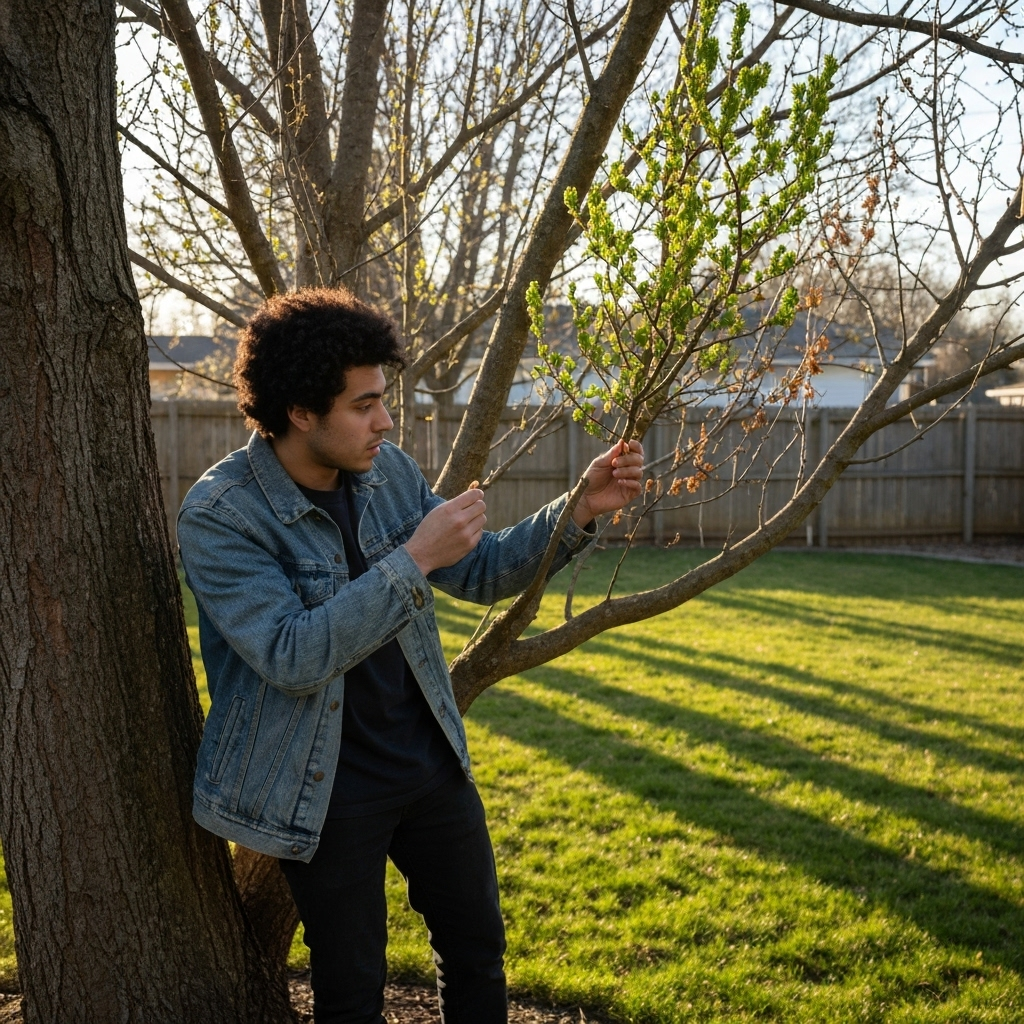
It can be hard to tell if a tree with no leaves is a dead tree in winter. A lot of trees go into dormancy when it gets cold. This helps them save energy and stop most new growth. This is a normal part of the life cycle for many trees.
A dormant tree acts like it is sleeping for a while. It saves up energy in its roots and trunk, like during hibernation. A dead tree is different because there is no life left in it, and it will not get better. You have to know how to tell the difference between a dead tree and a dormant tree. Look at things like the bark and the base of the tree. This is important for good tree care.
Key Differences Between Dead and Dormant Trees
It can be hard to tell a dead tree from a dormant tree, mostly when it is not growing season. A dormant tree is alive. It is just taking a break. A dead tree is not coming back. It has gone through tree death for good. You can spot the difference by looking at the branches, bark, and buds. Dormant trees will still have branches that are bendy. The buds will be big and feel full. They are waiting for spring to wake up again.
A dead tree often has dry twigs that break with little effort. You might see parts of the tree rotting near the bottom or notice no foliage on its branches, even while other trees around it have leaves. A simple way to check a dead tree is to do a scratch test on one of its branches. If you see a lack of foliage and the scratch test shows no green, the tree is likely dead.
The table below shows the main things that can help you find out what shape your tree is in.
Feature | Dormant Tree | Dead Tree |
|---|---|---|
Branches | Flexible and bend easily | Brittle and snap cleanly |
Buds | Present, firm, and may be moist inside | Absent, dry, or shriveled |
Bark (Scratch Test) | Green, moist tissue underneath | Brown, dry wood underneath |
Seasonal Changes | Shows new growth in spring | Remains bare and lifeless |
Why It’s Important to Identify a Dead Tree
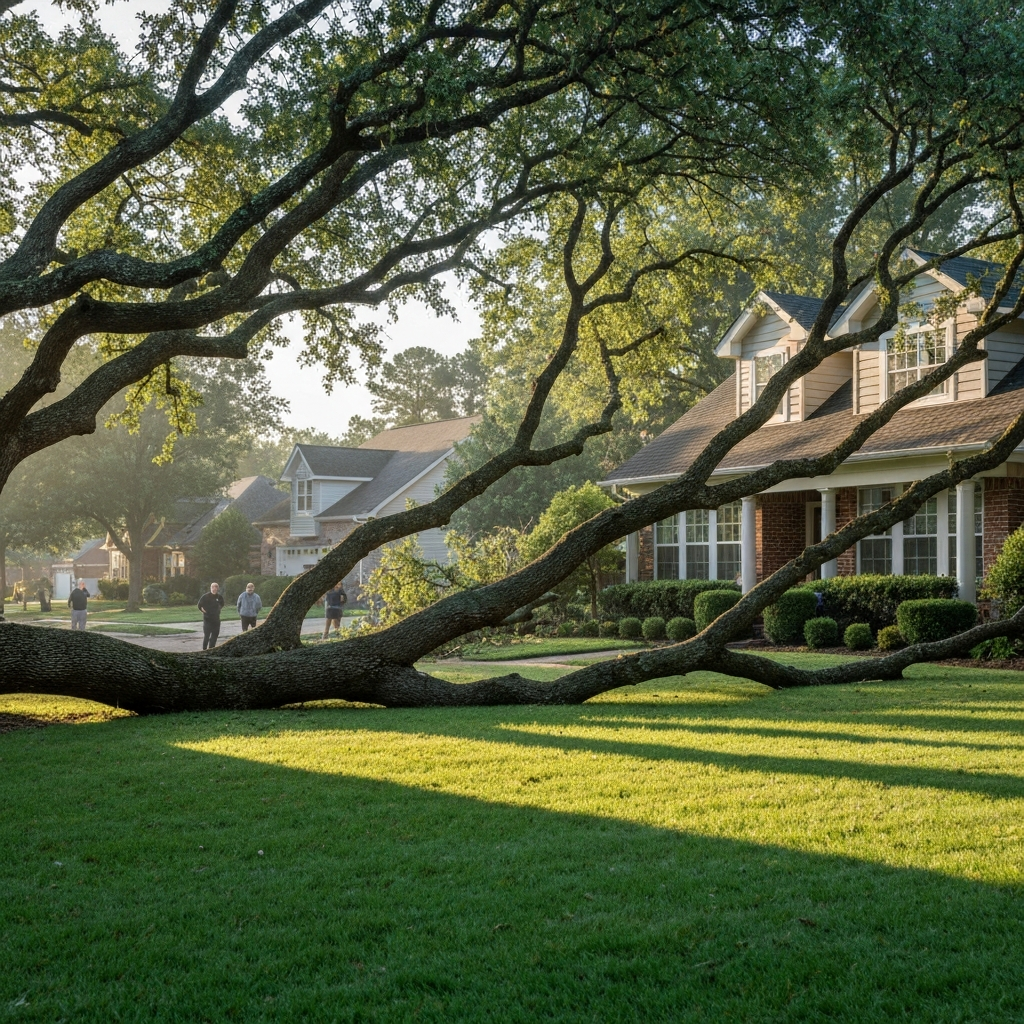
It is important to know if there is a dead tree on your property. You need to do this mainly for safety reasons. A dead tree loses its strength over time. This can make the entire tree unsafe. Its branches may fall at any moment. The whole tree could go down in a storm. This can hurt people, hit buildings, or damage cars. That is why you should spot a dead tree as soon as you can.
When you see that a tree is dead, it can’t fight off bugs or sickness any more. This means pests or fungi may start to grow there. These things can move on to other trees or plants in your yard. Removing a dead tree helps keep the rest of your yard safe from pests or fungi.
If you think your tree might be dead, tree removal may be the best thing to do. It is not safe to try this on your own. A professional arborist can look at your tree and tell you if it has to be taken down. They will make sure everything is safe. A trained arborist knows if there is any risk, and they can do the work the right way.
Visual Signs That Indicate a Tree May Be Dead
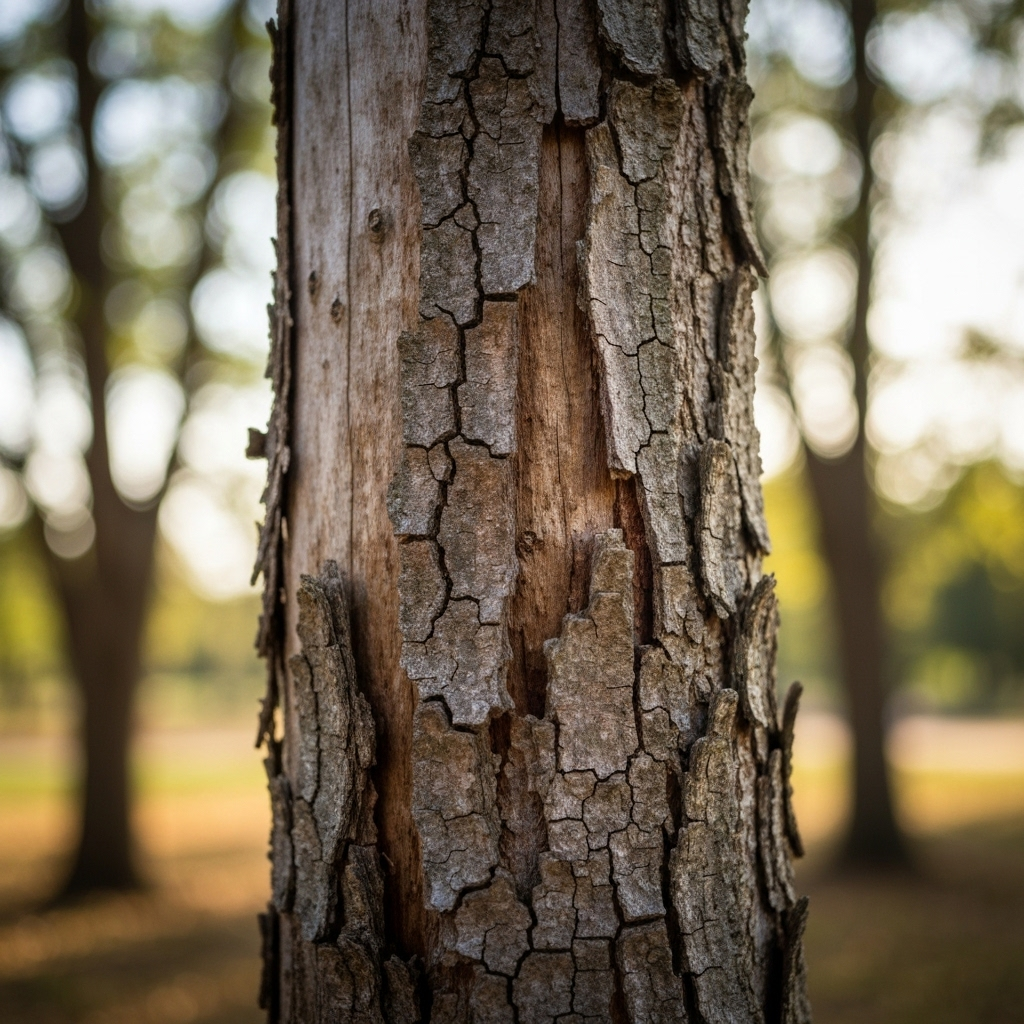
You do not always have to be an expert to notice a dead tree. A simple look at it can show clear warning signs. If you check the tree’s bark, branches, and trunk, you may get a good idea about its health. Not paying attention to these signs can lead to more problems later.
Watch for things that do not feel normal for the time of year. A tree with no leaves in summer can be a big warning sign. Take a look at the bark. See if you spot any peeling or dead branches. Look for any signs of rot, too. These may show that the tree is not in good shape.
Bark Peeling, Cracking, or Missing
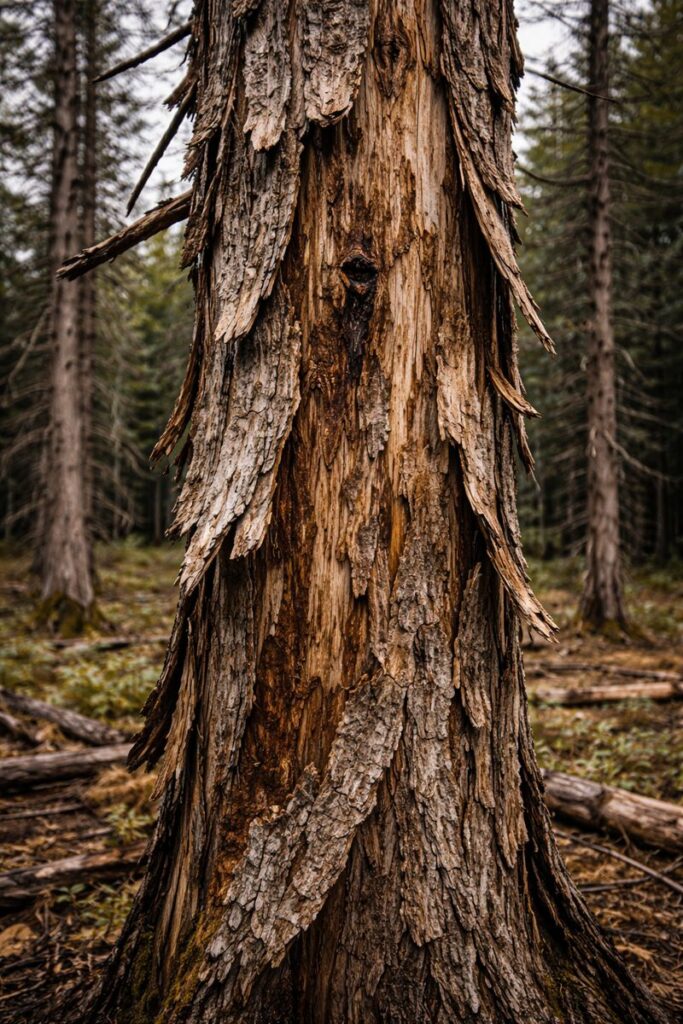
A tree’s bark works like the skin for the tree. It protects the tree from pests and disease. If you see significant bark loss, it is a warning sign to look out for. A little bit of peeling can be normal for some trees. But if big pieces of bark come off and you spot dry wood under it, there may be a problem. This can hurt the structural integrity of the tree.
Another thing you can see on a dead tree is deep or straight-up cracks in the bark. These vertical cracks show that the tree has stopped growing, and it cannot fix itself. If you feel the bark, it might come off easily. The wood under the bark can be dry and break apart.
When you see a dead tree with significant bark loss, it means the tree is under stress. The tree’s defenses get weak at this point. A lot of missing bark leaves the wood open to the air and to pests. This can cause the wood to rot faster. If there are big areas without bark, especially near the bottom of the tree, this is a sign that the tree’s health is not good.
Lack of Leaf Growth and Color Changes
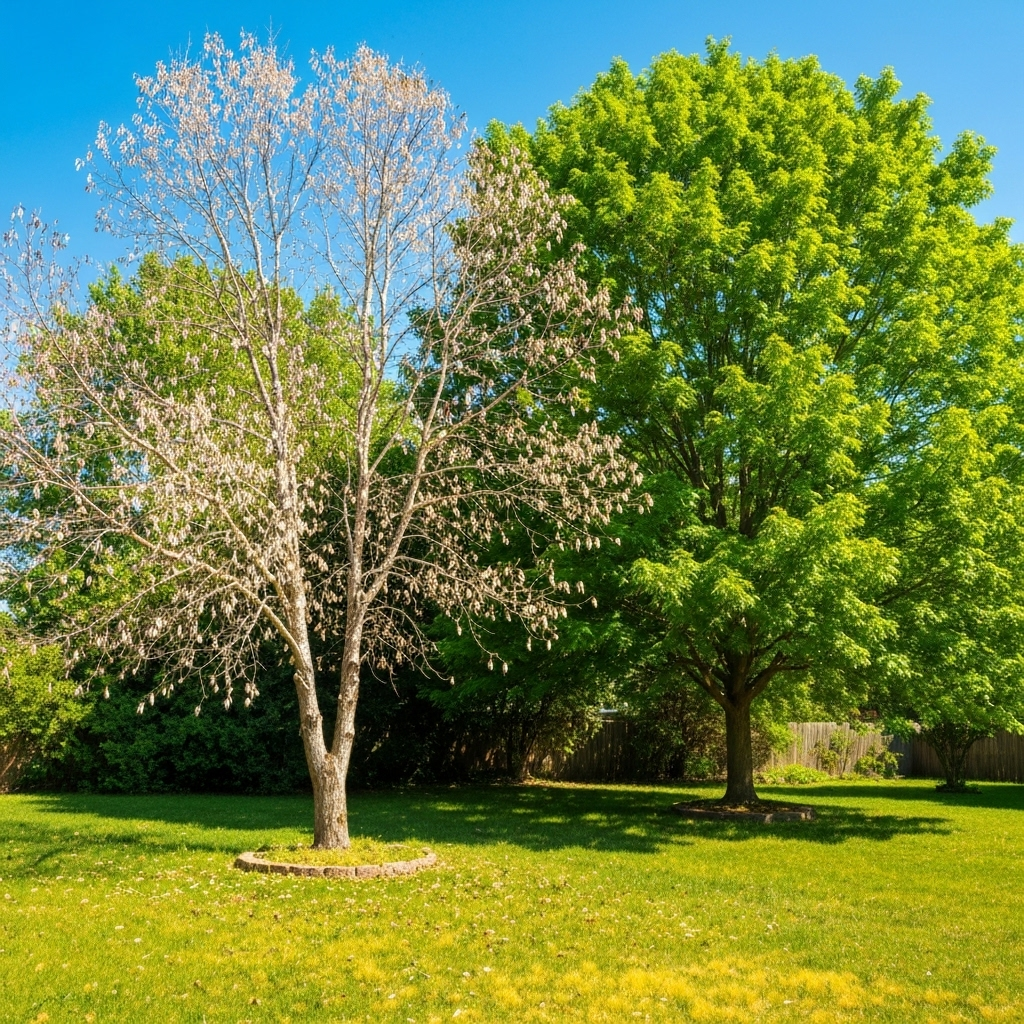
One clear sign of a dying tree is that it does not get leaves in the growing season. When spring is here, healthy trees have a lot of foliage. But, if your tree still has bare branches and there is no foliage while other trees have leaves, you should worry. A lack of leaves that stays for a long time shows the tree is not alive.
Even if the tree has leaves, you should look at how they look. If you see the leaves changing color out of season, like turning yellow or brown in the summer, this may show poor health. A dying tree can also have small or wilted leaves. This can make the canopy look droopy.
Keep a watch for these leaf signs.
There are no leaves or buds on the tree in spring or summer.
The leaves are yellow, brown, or show colors other than green, even though they should be green.
The canopy of the tree looks thin and does not have as many leaves as before.
The tree starts to drop leaves outside of autumn.
Presence of Fungi, Mushrooms, or Rot on the Trunk
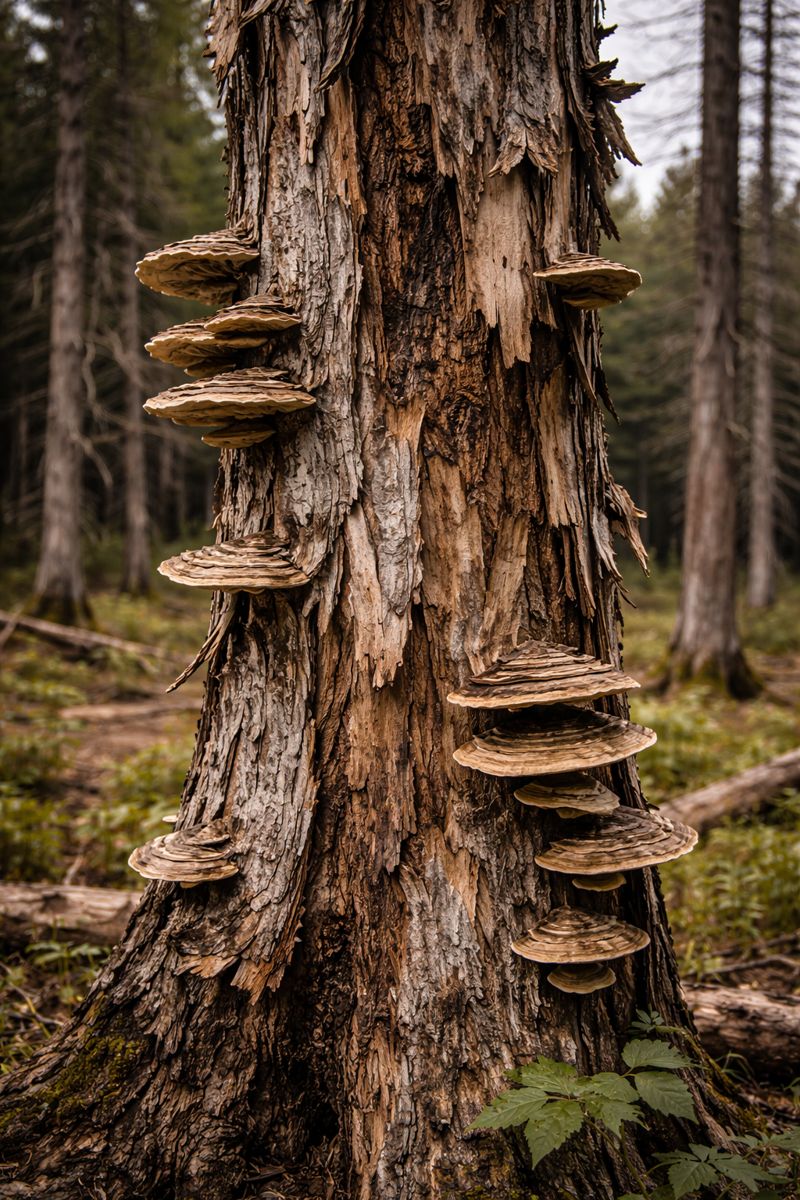
The growth of fungi or mushrooms on the tree trunk usually means there is rot. These fungi use dead or weak wood to feed. So, if you see them, it shows that the tree could be in trouble. Sometimes, it is already facing a lot of rot. Make sure to look near the base of the tree and on its main trunk for these signs.
Signs of rot be one of the biggest things to look for in a dying tree. If the wood is soft and spongy or the bark comes off easy, this can mean there is internal decay in the tree. To see mushrooms at the base is not good, because that may show there is root rot there. This rot can make the tree weak and not safe.
If you notice any of the things below, your tree could be at risk:
You may see mushrooms or other types of fungi on the tree trunk or at the base of the tree.
A tree trunk could have big holes or feel hollow in some parts.
If you see sawdust around the tree base, it might mean insects are boring into the wood as it breaks down.
Beginner’s Guide: How to Check if Your Tree Is Dead
Are you worried that your tree might not be alive? The good part is you do not need to guess. There are a few easy ways to check if your tree is still showing signs of life. You can do these tests at home and they do not hurt the tree. These checks are helpful as the first thing to do in your tree care routine. They can help you know if you need to call a certified arborist for more help.
From a simple check of the branches to doing the well-known scratch test, these are things that any homeowner can do. You do not need a lot to get started. Below, we will talk about the tools you need. Then, we will show you the steps you have to take to see if you have a healthy tree, a tree that is still sleeping, or a dead tree.
What You’ll Need to Get Started (Basic Tools and Safety Gear)
Before you start to look at your tree, it is good for any tree owner to get a few simple tools and the right safety gear. You don’t need anything hard to use, and most people already have these things in the garage or tool shed. Having these ready will help make the work faster and safer.
Your safety should be the top concern, more so when you feel you have a dead tree that is not stable. Do not climb a tree that is dying. Always keep an eye on what is around you. A basic check does not need a lot of things. Still, it helps to get ready for it.
Here are the simple tools and safety gear that you may need:
Gloves: Use these to keep your hands safe when you touch branches and bark.
A small pocketknife or your fingernail: You will need this tool to do the scratch test on the bark of the tree.
Safety glasses: Put these on to keep your eyes safe from falling twigs or pieces of bark.
Step-by-Step Guide to Assessing Tree Health
Checking how healthy your tree is does not have to be hard. There are some easy steps you can take to see signs of life. This guide will show you a simple way to look at your tree. You will not hurt the tree. It is a great way to look after your yard and make sure everything is well.
First, look at the tree from far away. Then get close to check it with your hands. See if there are dead branches. Look for a trunk that leans. Notice if there is a lack of leaves in the growing season. These things can tell you what to check next.
Checking your tree is easy. You need to look at the branches and buds. You also need to do the scratch test. Last, you should look at the tree’s base. Every step can help you see how healthy your tree is. If you put all the information together, it will help you know if your tree is alive and well. You can also find out if it is dormant, or if it is not doing well.
Step 1: Inspect Branches and Buds
Start your inspection by looking at the tree’s branches and buds. A dormant tree may look quiet, but you should see signs of life. Healthy trees will still have live buds on their branches, even in winter. These buds are plump and feel moist. They get ready to grow when spring comes.
Carefully bend some small twigs or branches on different parts of the tree. If the branches bend easily and don’t break, this shows they are still alive. Dead branches will feel dry and hard, and they will break fast and clean when you put pressure on them.
If you see shriveled, dry, or missing buds on your tree, it can be a sign that part of the tree is having problems. Healthy trees might have some dead branches, but if there are a lot, that is a clear warning sign. You can do an easy flexibility test to check if the tree is still alive. This test is simple and does not hurt the tree.
Step 2: Perform the Scratch Test on the Bark
The scratch test is a good way to see if a tree is alive. To do this, take a small branch and use your fingernail or a small pocketknife. Gently scratch off a little of the bark. Look at the layer under the bark to find out if the tree is still living.
If the tree is alive, you will find a moist green layer just under the bark. This green layer is called the cambium layer. The cambium layer helps move nutrients through the tree. If you see this green tissue, it shows that the tree is living, even when there are no leaves. If the layer under the bark is brown and dry, that part of the tree is most likely dead.
For the best results, do the scratch test on a few branches around the tree. This way, you get the most correct answer about the tree’s health.
Green and moist: The tree is alive.
Brown and dry: The branch is dead.
No green layer: A dead tree will not have this green tissue at all.
Step 3: Examine the Roots and Soil Condition
The health of a tree begins at its roots. You should always look at the base of the tree. Try to find any visible roots near the trunk. Good roots feel firm and are set well in the ground. If you spot roots that feel soft, look decayed, or smell bad, it can be a sign of a problem below the surface.
The soil tells a lot about a dying tree. Soil that is very wet or packed down tight can hurt the roots. This can make them weak or even cause them to die. You should check for any raised ground near the tree base. A tree that starts to lean all of a sudden may also show it has structural instability from a root problem.
Fungi, such as mushrooms, that you see at the base of the tree often show that there could be internal decay or rot in the roots. You might not always see problems with the roots themselves, but these signs you spot on the outside are very important warnings. If the roots are not healthy, the entire tree can die quickly.
What to Do If You Suspect Your Tree Is Dying
If you see signs that you might have a dying tree, you need to do something about it. With good tree care, you may help a struggling tree get better. But sometimes, a dead tree is past saving and can be dangerous. At that time, you need to take care of it right away.
Deciding what to do next can feel hard. This is why it is a good idea to talk to a certified arborist. A certified arborist will know how to look at your tree and figure out what is wrong. The arborist can help you choose if you should try treatment or if tree removal is needed. You can read more about when you should call a professional and what you can do with your tree.
When to Consult a Certified Arborist
If you have done the basic checks and still do not know if the tree is healthy, you should ask a certified arborist for help. If you are a tree owner, talking to an arborist is the most reliable way to find out what is wrong. The arborist knows what to look for and can tell you if there are problems that you do not see.
A professional arborist is someone who knows a lot about taking care of trees. They can look at your tree and find out if it has pests, is sick, or if it is having problems because of the environment. A professional arborist can tell if you have a dead tree or if it might get better with some tree care. Getting help from an expert is very important, especially when the tree is large or close to your house.
You should call an arborist if:
You see peeling bark and not many leaves. These are signs you should watch for.
The tree starts to lean suddenly. It might have root damage that you can notice.
There are large dead branches. There can also be fungus growing on its trunk.
Safe Ways to Remove or Treat a Dead Tree
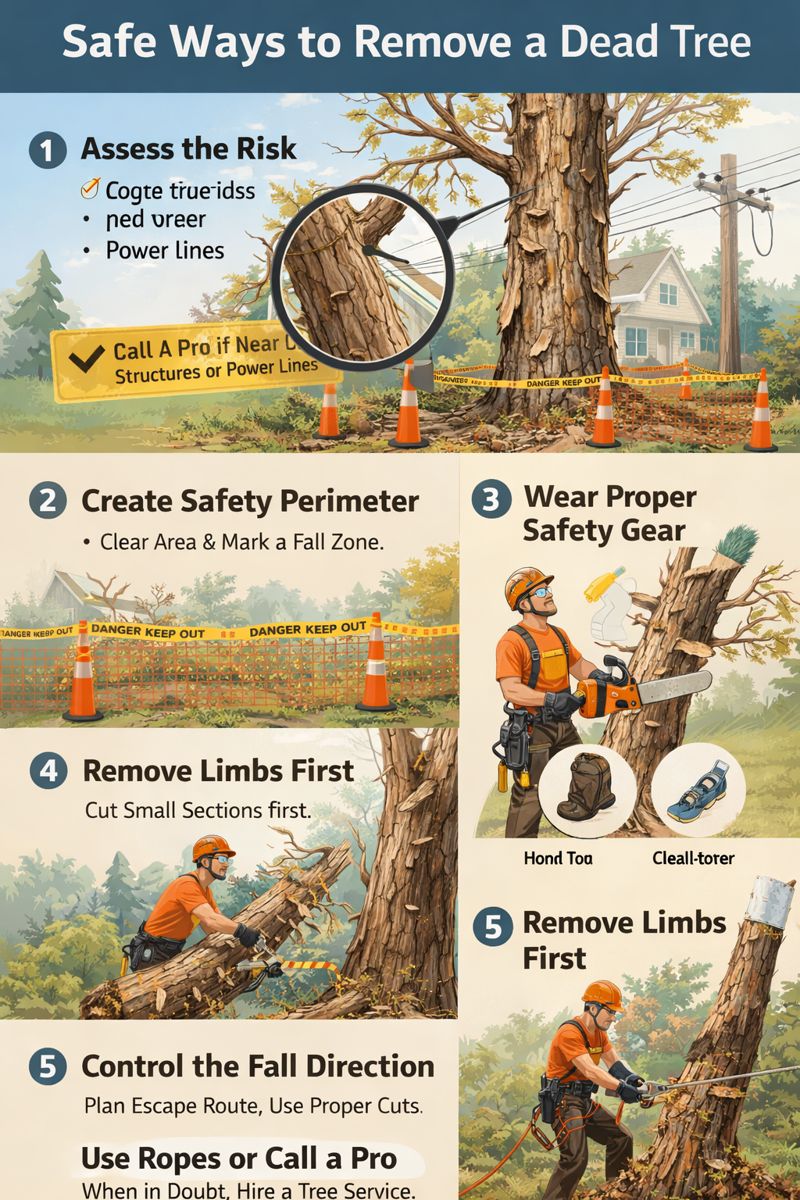
If an arborist says you have a dead tree, the best and safest thing is often to remove it. A dead tree can have structural instability. This means it might fall and put your property or safety at risk. Always remember, trying to handle tree removal on your own can be very risky, especially if the tree is big. Professional tree removal services have the tools and know-how for this work. They can make sure it is done safely and right.
For safety reasons, you should not cut down a dead tree by yourself. A professional knows how to handle what might be risky about the tree. They take care of everything, starting with checking the tree and going through to cleaning up after. This can include stump grinding. They will make sure your property is safe when they finish the job.
If you see that your tree looks like it is dying but it’s not dead yet, an arborist can help. The arborist might say you should try a treatment.
Pruning: When you cut off dead or sick branches, the tree can use its energy to grow stronger branches.
Watering and Mulching: Giving the tree enough water and using mulch can help if the tree is having problems.
Pest and Disease Treatment: An arborist can treat the tree to fix some problems, like bugs or disease.
Fertilization: Adding nutrients can help a weak tree feel better and grow again.
Conclusion
It is important to know if a tree is dead or alive to keep your yard healthy. You need to look at things like problems with bark, lack of foliage, or fungus growing on the tree. Knowing these signs helps you make the right choices. Use the steps in this guide, like checking the branches and looking at the roots, to find out what is wrong with your tree and see how it is doing. If you think the tree might be dying, it is best to get help from a certified arborist. A skilled arborist knows what to do and can offer safe removal or ways to treat the tree. Make sure you pay close attention and act quickly to help your trees stay in good shape for a long time.